
The Discipline of Repetition: Why Recovery Is a Competitive Advantage
Jenna Klier
2/24/20262 min read
In bodybuilding, success is rarely dramatic.
It’s not the one hard workout.
It’s not the one perfect prep.
It’s not motivation.
It’s repetition.
The athlete who wins is the one who repeats the right behaviors longer than everyone else — under fatigue, under stress, under boredom.
Training is repetition.
Meals are repetition.
Sleep is repetition.
Posing is repetition.
But there’s a part of repetition that most athletes underestimate:
Recovery.
Recovery Is Not Passive
Most bodybuilders treat recovery like something that “just happens” between sessions.
It doesn’t.
Recovery is a process you either support intentionally — or you leave to chance.
When recovery is neglected:
Inflammation lingers
Joints ache
Sleep quality drops
Nervous system stays elevated
Performance plateaus
When recovery is structured:
Training intensity improves
Mind-muscle connection sharpens
Stress tolerance increases
Sleep deepens
Longevity extends
The difference isn’t genetics.
It’s grounding.
Grounding the Nervous System
Bodybuilding is sympathetic-dominant by nature.
Heavy loads.
High stimulus.
Constant progression pressure.
If you are always “on,” you never fully adapt.
Grounding practices shift the body back toward parasympathetic dominance — the state where tissue repair, hormone regulation, and muscular growth actually occur.
Simple tools work:
Post-workout downregulation breathing
Consistent pre-sleep wind-down routine
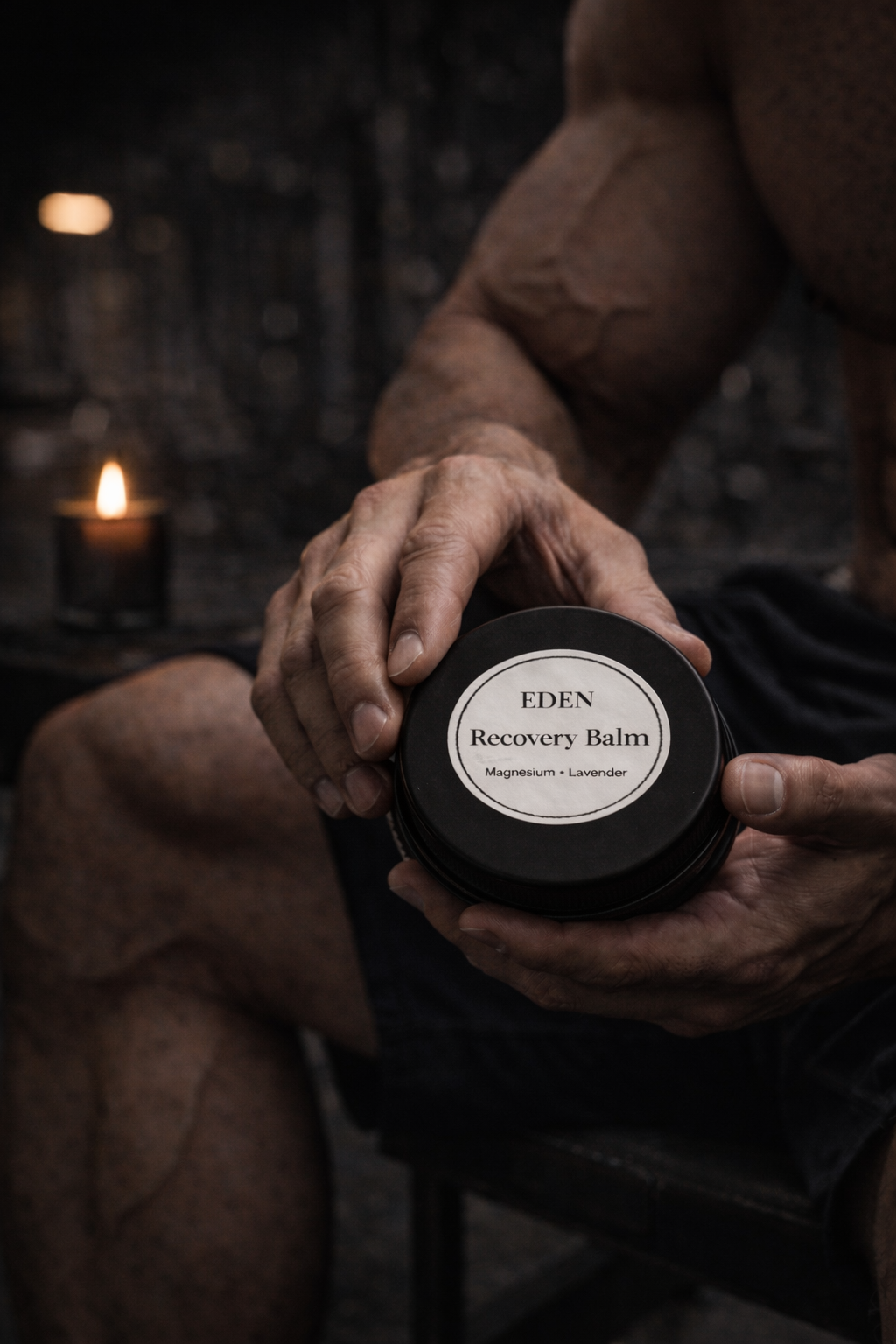
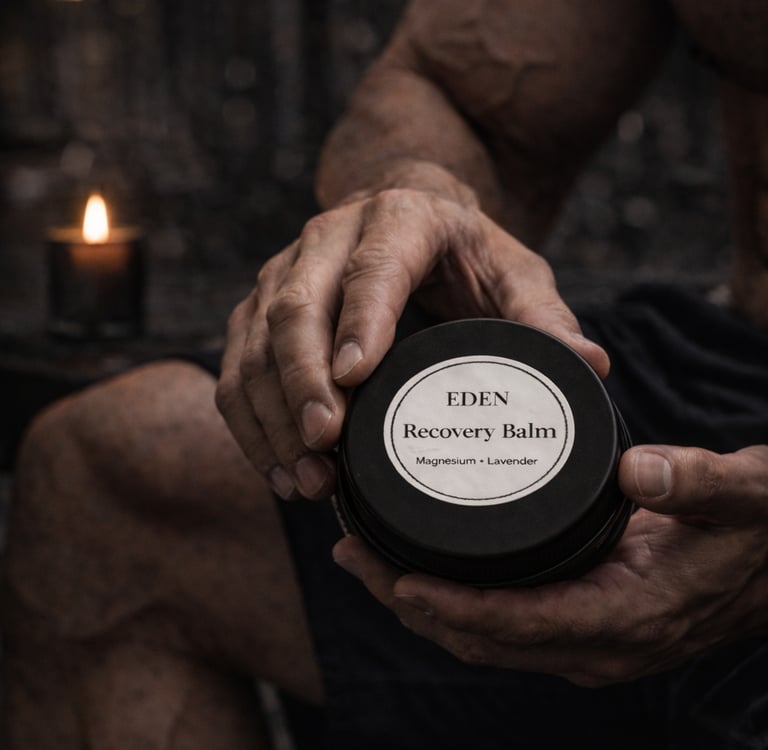
Magnesium-based topical support for muscular relaxation
Controlled lighting and sensory input at night
Small signals tell the body:
“You are safe. You can recover now.”
This is not soft.
It is physiological.
Repetition Builds Regulation
High-level athletes don’t rely on mood.
They rely on systems.
The same way you eat at the same time, train at the same time, and check weight at the same time — recovery should follow a repeated structure.
Example framework:
Post-Training
5 minutes slow nasal breathing
Topical magnesium balm on trained muscle groups
Light mobility work
Evening
Dim lights 60 minutes before bed
Reduce overhead lighting
Light a low-flame recovery candle to signal transition from output → restoration
No high-stimulus input
The goal isn’t aesthetic.
It’s conditioning the nervous system to associate certain cues with shutdown and repair.
Over time, the body responds faster.
That is an advantage.
Why Coaches Should Care
Athletes often underperform not because of lack of effort — but because they live in constant activation.
More cardio.
More sets.
More deficit.
More stress.
Rarely:
More regulation.
A coach who teaches structured recovery improves:
Compliance
Mood stability
Sleep consistency
Injury prevention
Longevity in the sport
Recovery is not weakness.
It is sustainability.
The Competitive Edge Most Ignore
The strongest athletes understand something simple:
Muscle is built in training.
Physique is revealed in diet.
But longevity is built in recovery.
Grounding practices, magnesium support, controlled sensory cues like low lighting and consistent evening wind-down environments — these are not luxuries.
They are systems.
Repetition builds size.
Repetition builds strength.
Repetition builds discipline.
And repetition builds recovery capacity.
The athlete who can recover consistently
is the athlete who can repeat consistently.
And the athlete who can repeat consistently
wins.
Contact
Questions? Reach out anytime, we’re here.
Phone
Jenna.edencandles.store@gmail.com
© 2025. All rights reserved.
Refund and Return Policy
Policies